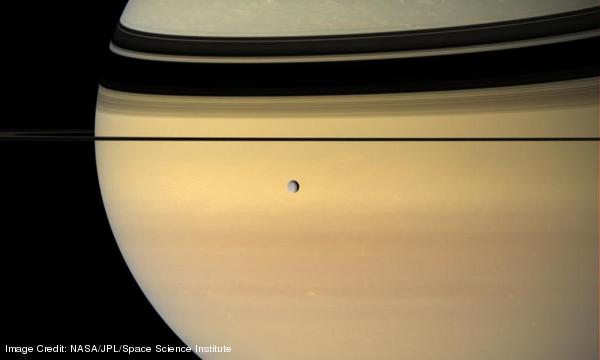
This is our Cassini-Huygens special all about the NASA/ESA mission to the planet Saturn. We find out all about Cassini from Carl Murray and find out how radio astronomers helped recover some data from the Huygens lander. We also get the latest news from Megan and find out what you can see in the night sky from Ian.
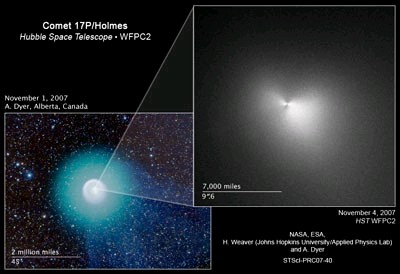
NASA/ESA Hubble Zooms In on Heart of Mystery Comet
Saturn seen by Voyager 1 in 1980. Credit: NASA/JPL/Space Science Institute
A portrait of Saturn by Cassini. Credit: NASA/JPL/Space Science Institute

A cross section of Saturn's rings (D, C, B, A, and F). Credit: NASA/JPL/Space Science Institute
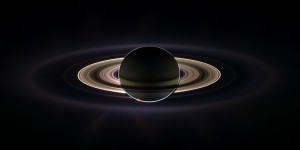
Saturn, backlit rings and the Earth. The G Ring is visible. Credit: NASA/JPL/Space Science Institute
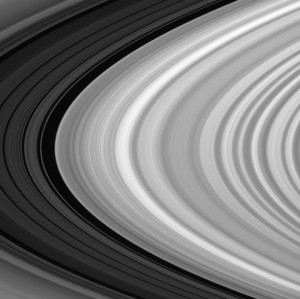
B Ring terminus. Credit: NASA/JPL/Space Science Institute
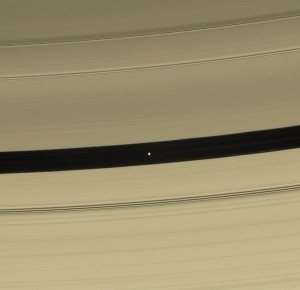
Pan in the Encke Gap. Credit: NASA/JPL/Space Science Institute
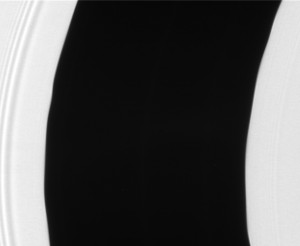
Waves in the Encke Gap. Credit: NASA/JPL/Space Science Institute

Discovery of Daphnis in the Keeler Gap near the edge of the A Ring. Credit: NASA/JPL/Space Science Institute
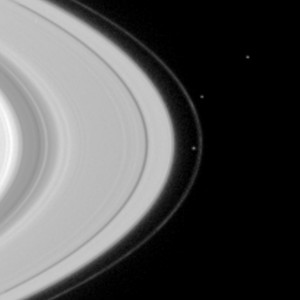
Pandora, Prometheus and the F Ring. Credit: NASA/JPL/Space Science Institute
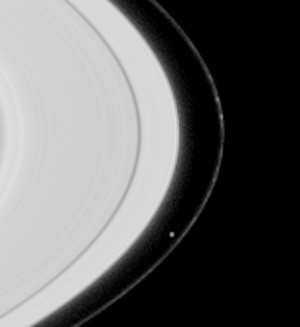
Prometheus and knots in the F Ring. Credit: NASA/JPL/Space Science Institute
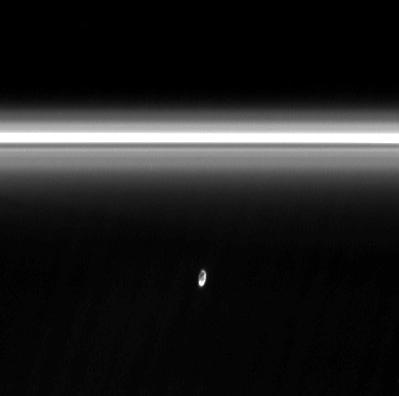
Prometheus colliding with the F Ring. Credit: NASA/JPL/Space Science Institute
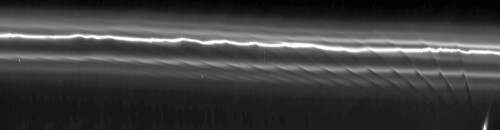
Prometheus creates a gore in the ring once every 14.7 hours. Credit: NASA/JPL/Space Science Institute
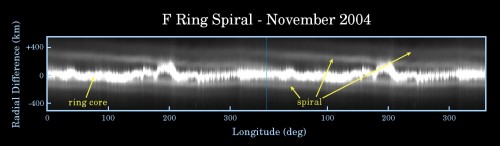
The F Ring spiral. Credit: NASA/JPL/Space Science Institute
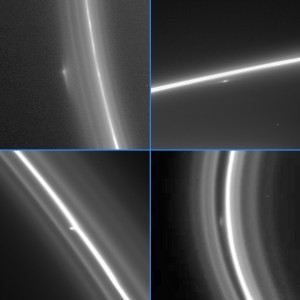
The Clump/Moon Mystery in the F Ring. Credit: NASA/JPL/Space Science Institute
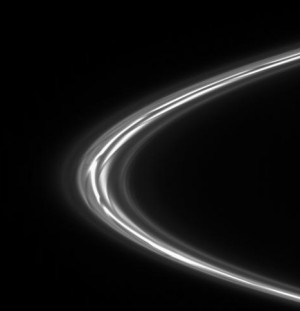
Braided Channels in the F-ring. Credit: NASA/JPL/Space Science Institute
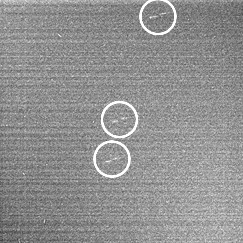
Propeller-shaped features in the A Ring. Credit: NASA/JPL/Space Science Institute
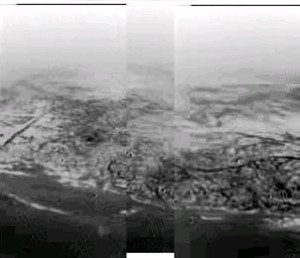
Composite of DISR images of Titan's surface during descent. CREDIT: ESA/NASA/JPL/University of Arizona

A fish-eye projection shows a stereographic view of Titan's surface from 5 kilometres above the surface on 14 January 2005. CREDIT: ESA/NASA/JPL/University of Arizona
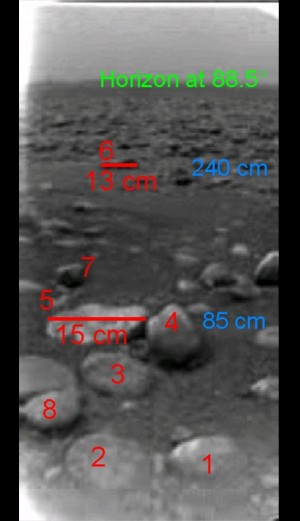
Raw image with scales showing the surface at the landing site of the Huygens probe. CREDIT: ESA/NASA/JPL/University of Arizona
Show Links
The news - December 2007
- MP3: Download this segment individually (low and high bandwidth versions)
- Sky & Telescope: Comet Holmes Beckons Skygazers Worldwide
- Gemini: Astronomers Spot Evidence for Colliding Planet Embryos in Famous Star Cluster
- Important Announcement from the Gemini Board - November 16, 2007
- Planetary Society: That's no near-Earth object, it's a spaceship!
- Planetary Society: Son of Rosetta
Interview with Prof Carl Murray (Queen Mary, University of London)
- MP3: Download this segment individually (low and high bandwidth versions)
- NASA/ESA's Cassini-Huygens
- The Voyager 1 and 2 Saturn encounters
- Science Magazine: Discovery of S/2004 S6
Interview with Dr Leonid Gurvits (JIVE)
- MP3: Download this segment individually (low and high bandwidth versions)
- Joint Institute for Very Long Baseline Interferometry in Europe
- Very Long Baseline Interferometry (VLBI)
- ESA: Radio astronomers confirm Huygens entry in the atmosphere of Titan
- Multi-Element Radio Linked Interferometer Network (MERLIN)
The night sky for December 2007
- MP3: Download this segment individually (low and high bandwidth versions)
- Ian Morison's Night Sky pages for December 2007
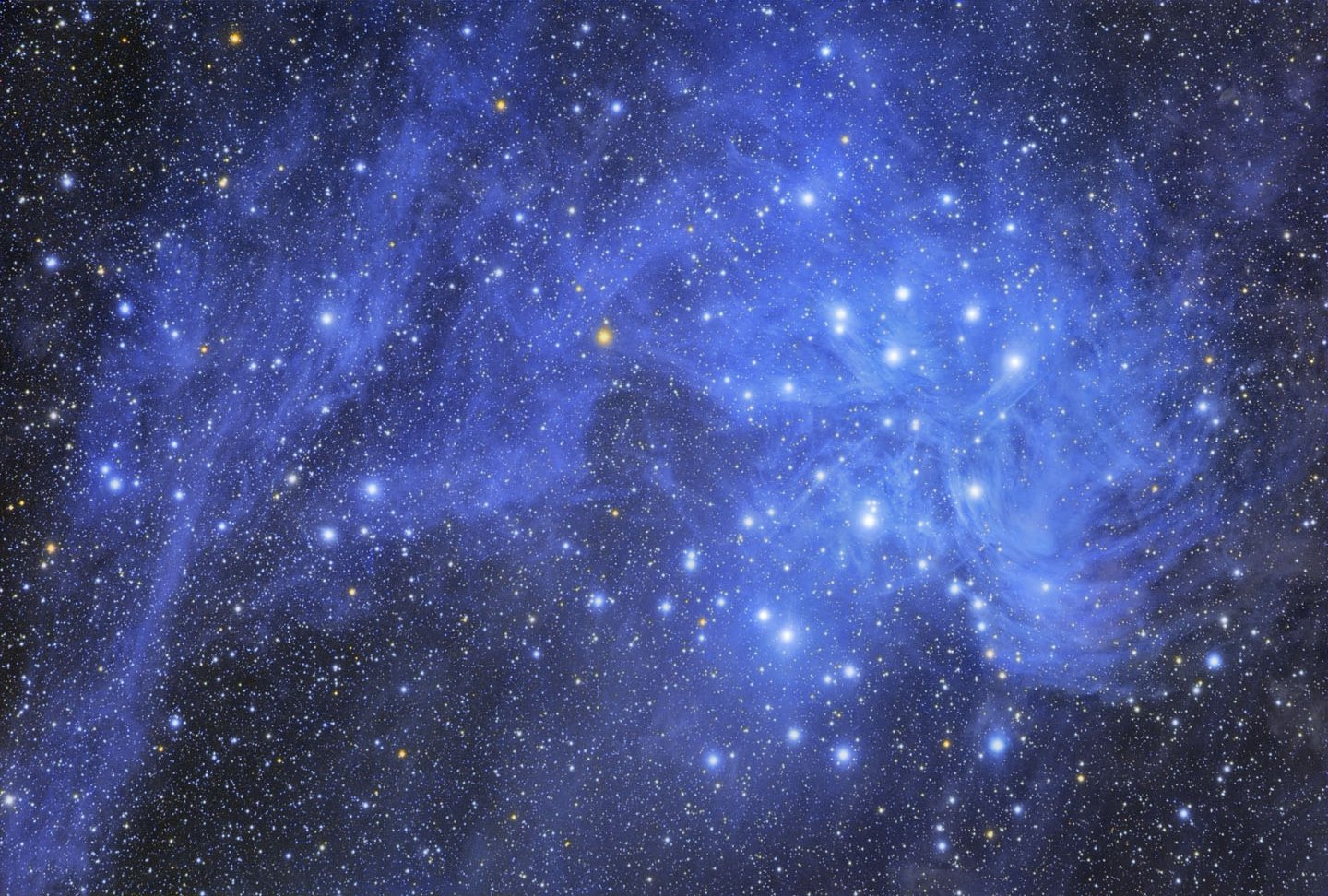
- The region around the Pleiades star cluster
- BAA: Meteor Observing Prospects for Autumn/Winter 2007-8
Show Credits
| News: | Megan Argo |
| Interview: | Prof Carl Murray and Nick Rattenbury |
| Interview: | Dr Leonid Gurvits, Stuart Lowe and Nick Rattenbury |
| Night sky this month: | Ian Morison |
| Presenters: | David Ault and Stuart Lowe |
| Editor: | Stuart Lowe |
| Segment Guest Presenter: | Danny Wong-McSweeney |
| Intro/outro script: | Dave Ault |
| Intro/outro voices: | Ian Morison as the Narrator, David Ault as The Ghost of Astronomy Past, Nick Rattenbury as Bob Rattenbury, Stuart Lowe as Stuart Scrooge, Tim O'Brien as The Ghost of Jodcast Present and Mark Bruzee was HAL |
| Website: | Stuart Lowe |
| Cover art: | Saturn imaged by Cassini Credit: NASA/JPL/Space Science Institute |