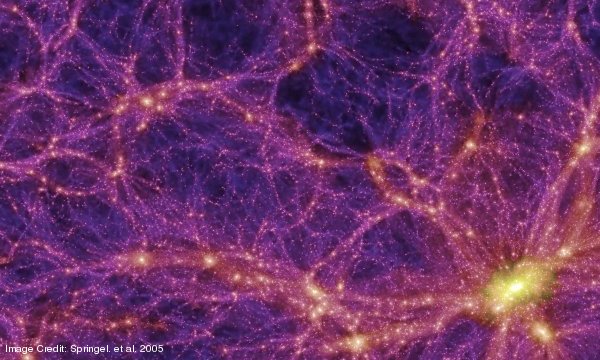
On February 8th and 9th we were at Astrofest in London. We bring you news from the Campaign for Dark Skies, we find out about the Space Telescope Science Institute and Google Sky, and we find out about computer simulations of galaxies. We also ask your questions to Dr Edward Boyce and Nick brings us news of an exciting planetary system that resembles our own.
Show Links
- Astrofest
- Earth Hour - turning off lights at 8pm March 29 2008
- The lunar eclipse of February 20/21 2008
- MP3: Interview with Sir Bernard Lovell - part 1
- MP3: Interview with Sir Bernard Lovell - part 2
- MP3: Interview with Sir Bernard Lovell - part 3
- Giant Planets are not Lonely Hearts
- Smaller Version of the Solar System Is Discovered (NY Times)
Interview with David Paul (Campaign for Dark Skies)
- MP3: Download this segment individually (low and high bandwidth versions)
- Campaign for Dark (star-filled) Skies
- Clean Neighbourhoods and Environment Act 2005
Interview with Dr Carol Christian and Dr Alberto Conti (Space Telescope Science Institute)
- MP3: Download this segment individually (low and high bandwidth versions)
- The Space Telescope Science Institute
- Hubble site
- James Webb Space Telescope
- NASA Goddard Space Flight Center
- Community Missions Office
- Gemini Observatory
- Kepler Mission
- US National Virtual Observatory
- MAST: Multimission Archive at STScI
- Sky and Google Earth
- The STScI Digitized Sky Survey
- The Sloan Digital Sky Survey
- The SAO/NASA Astrophysics Data System
- gSky
Interview with Dr Shaun Cole (University of Durham)
- MP3: Download this segment individually (low and high bandwidth versions)
- Galaxy Formation Group (MPA Garching)
- Formation of Galaxies (NASA)
Ask an astronomer - Lagrangian points, gravity waves and escaping asteroids
- MP3: Download this segment individually (low and high bandwidth versions)
- Lagrange points with animations (ESA)
- Lagrange points (Wikipedia)
- WMAP at L2
- LIGO gravitational wave detector
- GEO600 - The German-British gravitational wave detector
- January Extra 2008 show where we first answered the question about escaping from 15727 Ianmorison.
- Asteroid 15727 Ianmorison (JPL)
- XKCD: A comic describing what happens to Edward when asked questions like "Can you jump off an asteroid using a trampoline?"
Show Credits
| Interview: | David Paul and Stuart Lowe |
| Interview: | Dr Carol Christian, Dr Alberto Conti and Stuart Lowe |
| Interview: | Dr Shaun Cole and Nick Rattenbury |
| Ask an Astronomer: | Dr Edward Boyce and Nick Rattenbury |
| Presenters: | Megan Argo, Stuart Lowe and Nick Rattenbury |
| Editors: | Stuart Lowe and Nick Rattenbury |
| Segment Presenter: | Megan Argo |
| Website: | Stuart Lowe |
| Cover art: | The Millennium Simulation Credit: Springel. et al. 2005 |