March 2008
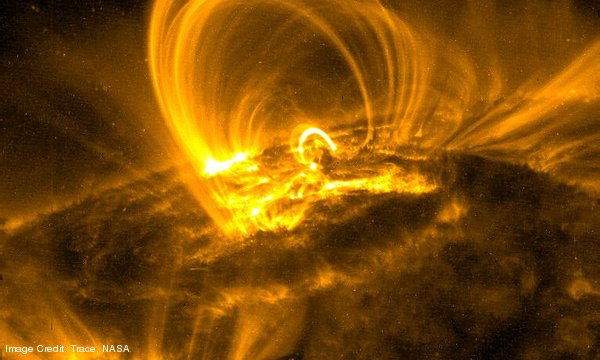
In this show we take a look the photosphere and corona of our local star - the Sun. We find out about the tremendously tangled web of plasma and magnetic fields that solar physicists are attempting to understand. We also get the latest news from Megan and find out what you can see in the night sky from Ian.
- March 2008 MP3: Download the whole show (low and high bandwidth versions)
The news - March 2008
In the news this month: proof of high energy X-rays from a nearby binary system, evidence of the system that caused the explosion of a Type 1a supernova is discovered, simulations of water flows replicate Martian surface features and the winners of the Planetary Society's Apophis Competition are announced.
- The news - March 2008 MP3: Download this segment individually (low and high bandwidth versions)
- Eta Carinae in Hard X-rays (ESA)
- Rare Massive Star, Eta Carinae, Produces Vast Winds Of Colliding Electrically-charged Particles (Science Daily)
- Discovery of the progenitor of the type Ia supernova 2007on, Nature 451, 802-804 (14 February 2008)
- Possible Progenitor of Special Supernova Type Detected (Chandra X-ray Observatory)
- Martian stepped-delta formation by rapid water release, Nature 451, 973-976 (21 February 2008)
- Alluvial fans (University of Oregon)
- Eurotank Laboratories in Utrecht
- 99942 Apophis - Earth impact risk (Jet Propulsion Laboratory)
- Winners of the Planetary Society's Apophis Competition
- Radio Tagging Mission Design to Near-Earth Asteroid Apophis (Space Works Engineering Inc)
Interview with Dr Lyndsay Fletcher (University of Glasgow)
Nick talked to Lyndsay Fletcher about solar flares as well as the surface and atmosphere of the Sun.
- Interview with Dr Lyndsay Fletcher (University of Glasgow) MP3: Download this segment individually (low and high bandwidth versions)
- Dr Lyndsay Fletcher
The night sky for March 2008
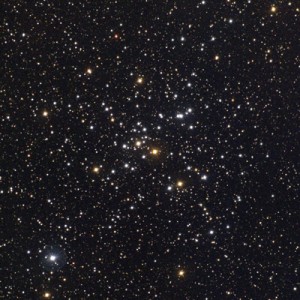
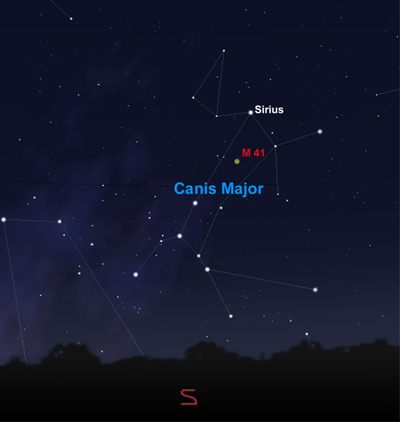
Ian Morison tells us what we can see in the night sky from northern latitudes during March 2008. Soon after sunset we still see the lovely part of the sky centred on the constellation of Orion, The Hunter. The belt points down (south-east) to Sirius in Canis Major, up to the left is Gemini and up to the right is Taurus. On March 5th Mars will be moving from Taurus into Gemini. Carrying on to the right of Aldebaran - the eye of the bull - is the Pleiades star cluster. High overhead is the star Capella in Auriga. This is a very rich part of the Milky Way and in binoculars, on a dark night, you will pick up a number of open clusters. Later in the evening we see Leo rising. To the lower left (east) of Leo is the constellation Virgo. The Virgo Super Cluster of galaxies lies beyond the constellation of Virgo. To the left of the star Denebola, towards Spica is a region we call "The Realm of the Galaxies". High above Leo is the constellation Ursa Major which contains the asterism known as The Plough (UK) or The Big Dipper (US). Venus and Mercury are together in the pre-dawn sky close to the eastern horizon. Jupiter is in the pre-dawn sky rising about two hours before the Sun at the start of the month and about 3 hours earlier that the Sun by the end of the month. It is in the constellation of Sagittarius so appears very low over the horizon at higher northern latitudes. Close to the star Regulus is the planet Saturn. Saturn reached opposition on February 24th. In March it will be high in the south in the mid-evening hours. With a pair of binoculars you can see the open cluster M41 a little below the star Sirius. It is about 200 million years old and some of its more massive stars have become red giants.
- The night sky for March 2008 MP3: Download this segment individually (low and high bandwidth versions)
- Ian Morison's Night Sky pages for March 2008
- The current location of the International Space Station
- Find out when you can see the International Space Station from your location
Show Credits
| News: | Megan Argo |
| Interview: | Dr Lyndsay Fletcher and Nick Rattenbury |
| Night sky this month: | Ian Morison |
| Presenters: | David Ault, Stuart Lowe and Nick Rattenbury |
| Editor: | Stuart Lowe |
| Cover Art: | Magnetic loops on the Sun CREDIT: Trace, NASA |
| Intro/outro script: | Dave Ault |
| Intro/outro voices: | Mark Bruzee played Optimus Prime, Fiona Thraille was the interviewer, Tom Backus was Sam's Dad, and Kat Pryde was Sam's Mum. |
| Website: | Stuart Lowe |