In this show we find out about a mysterious blue blob found in the Galaxy Zoo and we find out what the Genesis mission can tell us about oxygen in the solar wind. We also get the latest news from Megan and find out what you can see in the night sky from Ian.
Show Links
The news - May 2008
- MP3: Download this segment individually (low and high bandwidth versions)
- HST: Black hole found in enigmatic Omega Centauri
- ESA: Milky Way's black hole activity 300 years ago
- ESA's XMM-Newton
- Nature: The inner jet of an active galactic nucleus as revealed by a radio-to-big gamma-ray outburst
- Reuters: Radio telescopes capture black hole mid-belch
- Hubble marks 18 years in orbit
Interview with Dr Chris Lintott (University of Oxford)
- MP3: Download this segment individually (low and high bandwidth versions)
- Galaxy Zoo
- Galaxy Zoo Blog
- Galaxy Zoo Blog: The Mystery of the Voorwerp Deepens!
- Galaxy Zoo Blog: Voorwerp fever
- Dr Chris Lintott's Universe
- Slacker Astronomy video podcast: The light echo in V838 Mon
Interview with Prof Kevin McKeegan (UCLA)
- MP3: Download this segment individually (low and high bandwidth versions)
- Professor Kevin McKeegan
- NASA's Genesis Mission
The night sky for May 2008
- MP3: Download this segment individually (low and high bandwidth versions)
- Ian Morison's Night Sky pages for May 2008
- The current location of the International Space Station
- Find out when you can see the International Space Station from your location
- Astronomy Picture of the Day
- APoD: Phobos: Doomed Moon of Mars
- APoD: Stickney Crater on Phobos
- MP3: Listen to Ian's review of the Celestron NexStar 130SLT
Show Credits
| News: | Megan Argo |
| Interview: | Dr Chris Lintott and Stuart Lowe |
| Interview: | Prof Kevin McKeegan and Nick Rattenbury |
| Night sky this month: | Ian Morison |
| Presenters: | Stuart Lowe and Nick Rattenbury |
| Editor: | Nick Rattenbury |
| Intro/outro script: | Chris Brittain |
| Intro/outro voices: | David Maciver was the Narrator, Chris Brittain was Harry, David Ault was Harry's Dad, and Clym Angus was Slagrid |
| Website: | Stuart Lowe |
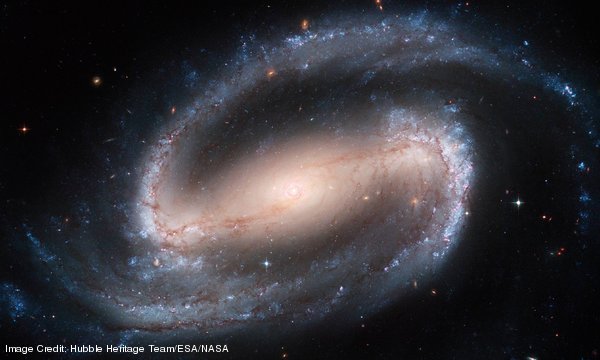
| Cover art: | NGC 1300 Credit: Hubble Heritage Team/ESA/NASA |