January 2026 : Same Planet, New Year
Episode Audio
Same Planet, New Year. This month, we are kicking off the new year with a special interview with Science communicator and climate advocate, Dr Simon Clark. He talks to Jessy and Louisa about why climate literacy is important, and what a day in the life of a YouTuber really like. In our Jodbite, Phoebe sits down with Dr Vasu Shaw about her research in Galactic magnetism and cosmic rays.
The News
Transporter 15's rideshare launched
The UK, among other international payloads, has had success in launching several satellite missions aboard Space X's Transporter 15. The launch on 28th November saw the release of 150 satellites, including BAE's Azalea cluster (the first satellites fitted with AI to process data onboard) and Blue Skies Space's Mauve satellite - which you'll hear more on next episode!Among the many missions to launch was ESA's HydroGNSS, with the task of scouting for water on Earth. The satellite will receive reflected L-band transmissions from other satellites - such as GPS - to determine properties such as soil moisture, freeze-thaw and biomass above ground. This technique is called Global Navigation Satellite System (GNSS) reflectometry and relies on each satellite containing two antennas to determine the delay in signal as well as accounting for doppler shifts in relative motion.
The aim is to understand the water cycle, as well as useful applications in agriculture and flood management. This suite of successful satellite missions comes at an exciting time for the UK space sector, with funding opportunities, increased collaboration with ESA and the question of what private industries can do for the sector’s development.
Giant Cosmic Highway Found Rotating, Carrying Galaxies Along for the Ride
Imagine a giant strand in the Universe - not made of steel, but of galaxies, gas and dark matter - spinning slowly through space, carrying entire galaxies along its orbit. An international team of researchers led by the University of Oxford have just discovered one of the largest rotating structures ever seen: a cosmic filament stretching across millions of light-years, spinning like a cosmic carousel. Using data from the radio survey MIGHTEE‑HI (carried out by the MeerKAT radio telescope array), the researchers identified 14 galaxies rich in atomic hydrogen (HI) that lie in an extremely narrow, elongated chain - around 1.7 Mpc long and just ~36 kpc wide.
But that was just the core. Surrounding these hydrogen-rich galaxies is a much larger filamentary structure - traced by thousands of optically detected galaxies - spanning at least ~15 Mpc in length. The key revelation: the spin axes of those galaxies are highly aligned with the overall filament direction, much more than cosmological simulations had predicted. Even more striking - the team found strong evidence that the galaxies are orbiting around the “spine” of the filament. This suggests that the filament itself is rotating, carrying galaxies along with it - making it among the largest known rotating structures in the Universe.
So why does this all matter? The Universe at large scales is thought to resemble a “cosmic web,” with galaxies, gas, and dark matter threaded along filaments, connected at nodes at intersections, theoretical frameworks have long predicted that the motions and spins of galaxies should be influenced by their filamentary environment. But this is perhaps the strongest observational evidence yet that not only galaxies - but entire filaments - carry angular momentum, influencing how galaxies spin and evolve.
This could change how we understand galaxy formation and evolution: instead of galaxies acquiring gas and spin largely through mergers or local processes, large-scale cosmic filaments might play a far more active role - shaping the spin, growth, and orientation of galaxies from the outside in. This discovery opens the door to a new era of cosmic-web astronomy. As radio telescopes like MeerKAT scan more of the skies, and next-generation instruments come online, we might uncover many more such rotating filaments. Each could reveal fresh insight into how galaxies gather gas, gain spin, and build structure - not as isolated islands, but as part of vast, rotating cosmic highways.
Interview with Simon Clark
Jessy and Louisa chat to Simon Clark about the life of a science communicator. We also discuss the importance of how to talk about Science with the public, and the challenges we need to overcome to tackle the climate crisis.
Jodbite with Vasu Shaw
Phoebe talks to JBCAs postdoc Vasu Shaw about her work on galactic magnetism, the future of cosmic ray experiments and the environmental impact of astrophysics research.
Show Credits
News : Emily Walls and Louisa Mason
Interview : Simon Clark and Jessy Marin and Louisa Mason
Night Sky : Emily Walls and Louisa Mason
Presenters : Emily Walls and Louisa Mason
Editors : Jamie Incley, Josh Bishop, Thea Hauxwell and Louisa Mason
Segment Voice : Lily Correa Magnus
Website : Lilia Correa Magnus & George Bendo
Producer : Phoebe Ryder
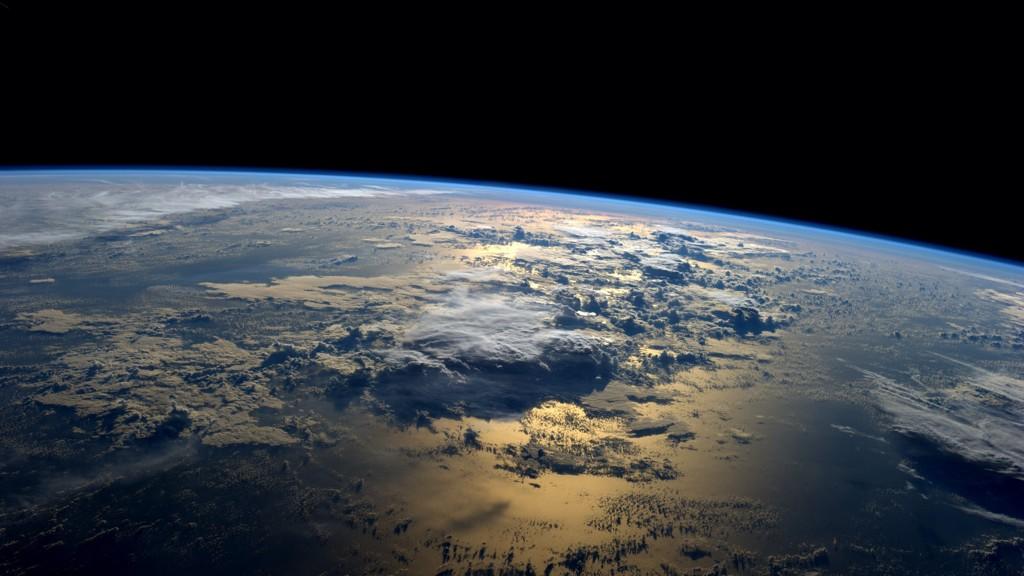
Cover Art : Image of the Earth taken from the International Space Station CREDIT:NASA Space Place.